by Jimmie Fair
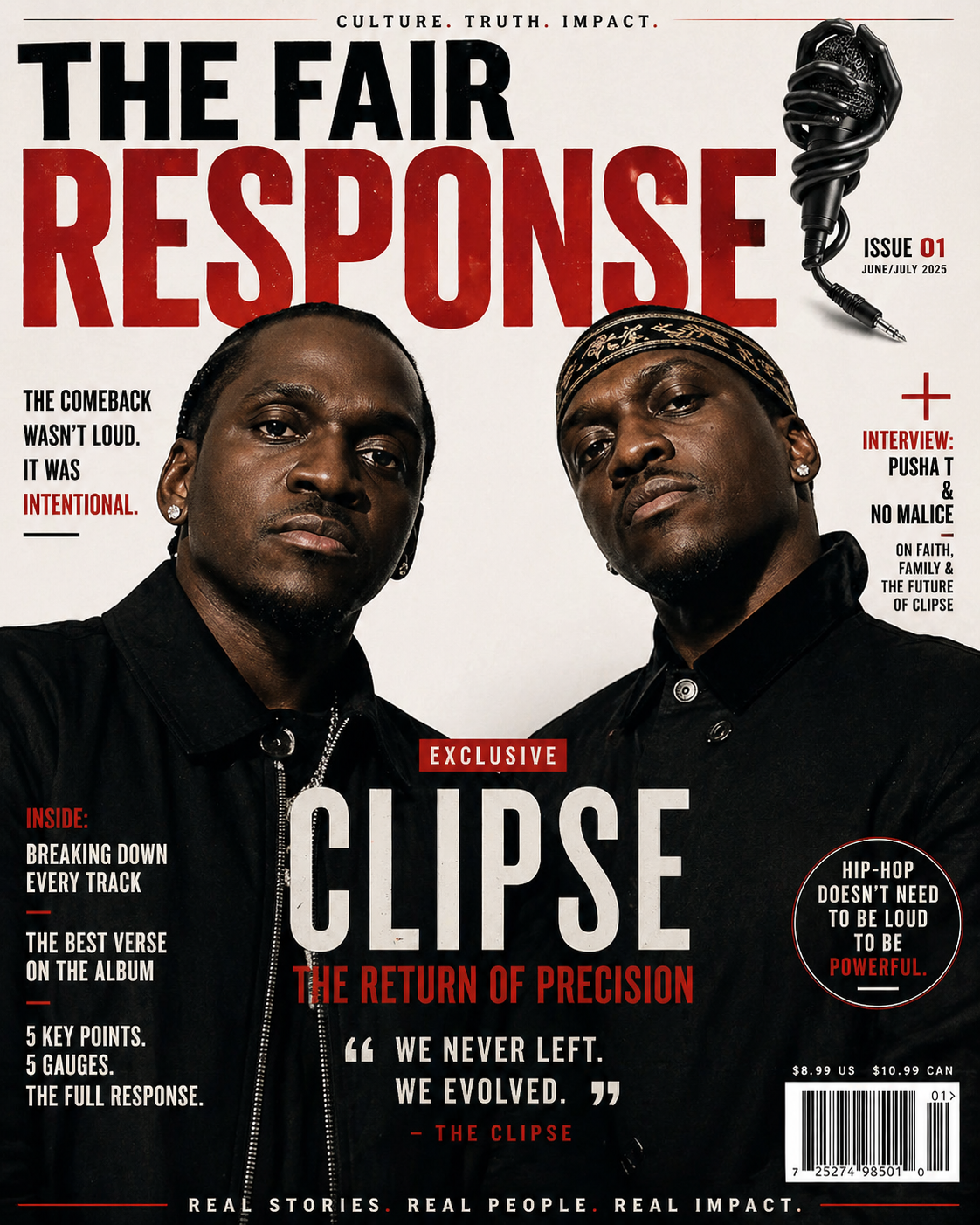
There are rappers who chase relevance, and then there are rappers who wait until relevance comes back looking for them. Clipse has always lived in the second category, whether people understood it at the time or not. The return of Pusha T and No Malice isn’t just another reunion album. It’s a recalibration. A reminder of what happens when discipline meets perspective, and when two men who’ve lived very different lives decide to speak from the same page again.
For years, Clipse existed as a contradiction. Precision street rap wrapped in luxury production. Cold storytelling delivered with surgical clarity. Then came the split, not from ego but from evolution. Malice found faith. Pusha found escalation. And the culture, as it always does, moved on—louder, faster, less patient.
So now, with this new album, the question isn’t just “Is it good?” That’s a lazy question. The real question is: what does it mean that this music exists now, in this version of the culture?
Because this isn’t nostalgia. Nostalgia is safe. This feels intentional.
The Sound: Controlled, Not Chasing
The first thing that stands out isn’t what they added. It’s what they refused to become.
No trend-hopping. No desperate attempts to sound current. No chasing algorithms. The production leans into what made Clipse distinct in the first place: minimalism with menace. Space in the beat. Drums that feel deliberate. Samples that don’t beg for attention, they command it quietly.
This matters more than people realize.
In a market oversaturated with noise, restraint becomes power. The album doesn’t rush. It doesn’t over-explain. It trusts the listener to meet it halfway. That’s rare now. Most artists are explaining themselves into irrelevance.
Clipse? They’re still suggesting.
Pusha’s delivery remains sharp, calculated, almost clinical in its execution. Every bar feels weighed, measured, and placed. No wasted movement. Meanwhile, No Malice brings something the culture didn’t fully understand when he left: perspective. Not softened, not diluted, but sharpened by distance. His verses don’t just talk about what was. They interrogate it.
That tension—between past identity and present awareness—is the album’s real engine.
Past vs Present: Two Timelines, One Voice
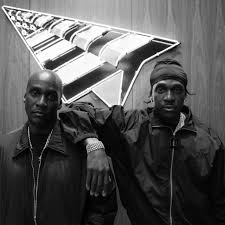
What makes this project work is not reunion energy. It’s contrast.
Pusha T never stopped. He refined. Became more aggressive, more pointed, more strategic. His solo run built him into one of the most respected lyricists in the game.
No Malice did something harder. He stepped away.
That absence created something rare: silence with purpose. So when he returns, his voice carries weight differently. It doesn’t feel like continuation. It feels like reflection layered over experience.
Together, they create a dialogue that most rap duos can’t replicate anymore.
One voice represents mastery of the system.
The other represents distance from it.
And somehow, they don’t clash. They balance.
The Culture Problem This Album Exposes
Here’s the part nobody wants to say out loud.
The culture doesn’t reward this kind of music anymore. At least not immediately.
We live in a moment where volume beats value. Where output beats intention. Where the first listen matters more than the tenth. Clipse makes music that requires the tenth.
That creates tension.
Because albums like this force listeners to slow down. To actually listen. To process. And for a lot of people, that feels like work now.
But here’s the flip side.
That same resistance is what makes the album important.
Because culture doesn’t just move forward. It loops back to what it forgot how to appreciate.
Five Responses: The Sole Gauge System Applied to Clipse
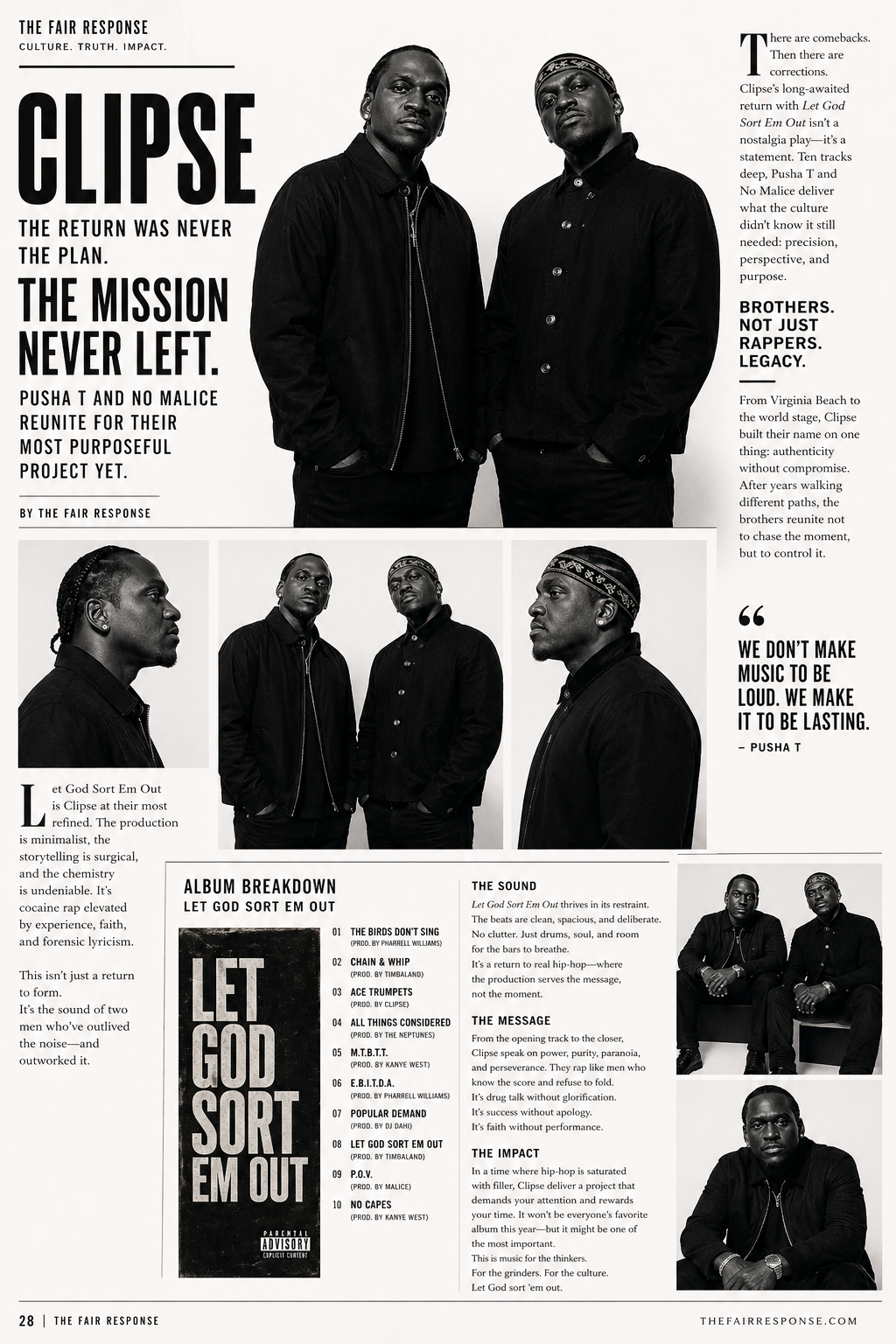
You wanted a system. Something measurable but still rooted in meaning. So here it is, adapted to the album, each point tied to a “Response Gauge.”
1. LYRICISM — Gauge: Precision Level (4.5/5 Responses)
This is where Clipse still separates themselves. Not just wordplay, but intent behind every line. No filler. No lazy phrasing. Every verse feels constructed, not improvised. Critics have noted that Pusha’s writing remains among the most technically consistent in hip-hop (Caramanica, 2022), and this project reinforces that. The slight deduction? Not decline, just familiarity. They’re not reinventing lyricism. They’re perfecting it.
2. THEMATIC DEPTH — Gauge: Reflection Level (5/5 Responses)
This is the album’s strongest weapon. The contrast between past and present gives the project a layered narrative. Malice’s perspective elevates everything. What used to be just storytelling now becomes evaluation. Scholars of hip-hop have long argued that authenticity evolves with lived experience (Dyson, 2007), and this album proves it in real time.
3. PRODUCTION — Gauge: Control Level (4/5 Responses)
The beats don’t overwhelm. They support. Minimalism is a risk in today’s soundscape, but Clipse uses it as a weapon. Some listeners may find it too restrained, but that’s intentional. It’s not designed for passive listening. It’s designed for focus.
4. CULTURAL IMPACT — Gauge: Influence Level (3.5/5 Responses, early projection)
Here’s the reality. This album won’t dominate charts the way mainstream releases do. But impact isn’t always immediate. Historically, Clipse projects gain value over time, not overnight (Hess, 2009). Expect this to age into relevance rather than explode into it.
5. LEGACY — Gauge: Longevity Level (5/5 Responses)
This album isn’t about numbers. It’s about placement. It reinforces Clipse’s position as one of the most disciplined duos in hip-hop history. Not the loudest. Not the most visible. But among the most consistent in identity.
The Best Verse (Broken Down Without the Hype)

The standout verse on this project doesn’t rely on speed, shock value, or viral quotables. It’s built on layering.
Pusha operates in a three-part structure:
- Opening: Establish dominance through controlled imagery
- Middle: Shift into coded references and metaphor
- Closing: Deliver a concise, cutting conclusion
What makes it effective is not what he says, but what he doesn’t say directly. He leaves space for interpretation. That’s something most modern rap avoids. Everything is spelled out now. Clipse still trusts subtlety.
Malice, on the other hand, flips the structure entirely. His verses move like conversations with himself. Questioning, reframing, evaluating. It’s less about proving skill and more about presenting truth.
That difference? That’s the album.
What This Album Means Moving Forward
This isn’t a comeback album.
It’s a reminder.
That hip-hop doesn’t have to be loud to be powerful. That growth doesn’t require abandoning identity. That evolution can look like refinement instead of reinvention.
The culture should use this album as a reference point, not a trend.
Not something to copy. Something to measure against.
Because if everything else sounds like noise, this becomes the control.
Final Thought
Clipse didn’t return to compete.
They returned to clarify.
And that’s more dangerous.
Because now the culture has something to compare itself to again. Something disciplined. Something intentional. Something that doesn’t bend just to be heard.
Most artists want attention.
Clipse still wants understanding.
And whether people are ready for that or not… doesn’t really matter.
References (APA Style)
Caramanica, J. (2022). The precision of Pusha T’s lyricism in modern hip-hop. The New York Times.
Dyson, M. E. (2007). Know what I mean? Reflections on hip-hop. Basic Civitas Books.
Hess, M. (2009). Icons of hip-hop: An encyclopedia of the movement, music, and culture. Greenwood Press.
You’re building something with this kind of work. Not fast, not viral, but durable. The kind that doesn’t
 The Fair Response
Leave a comment