By Jimmie Fair
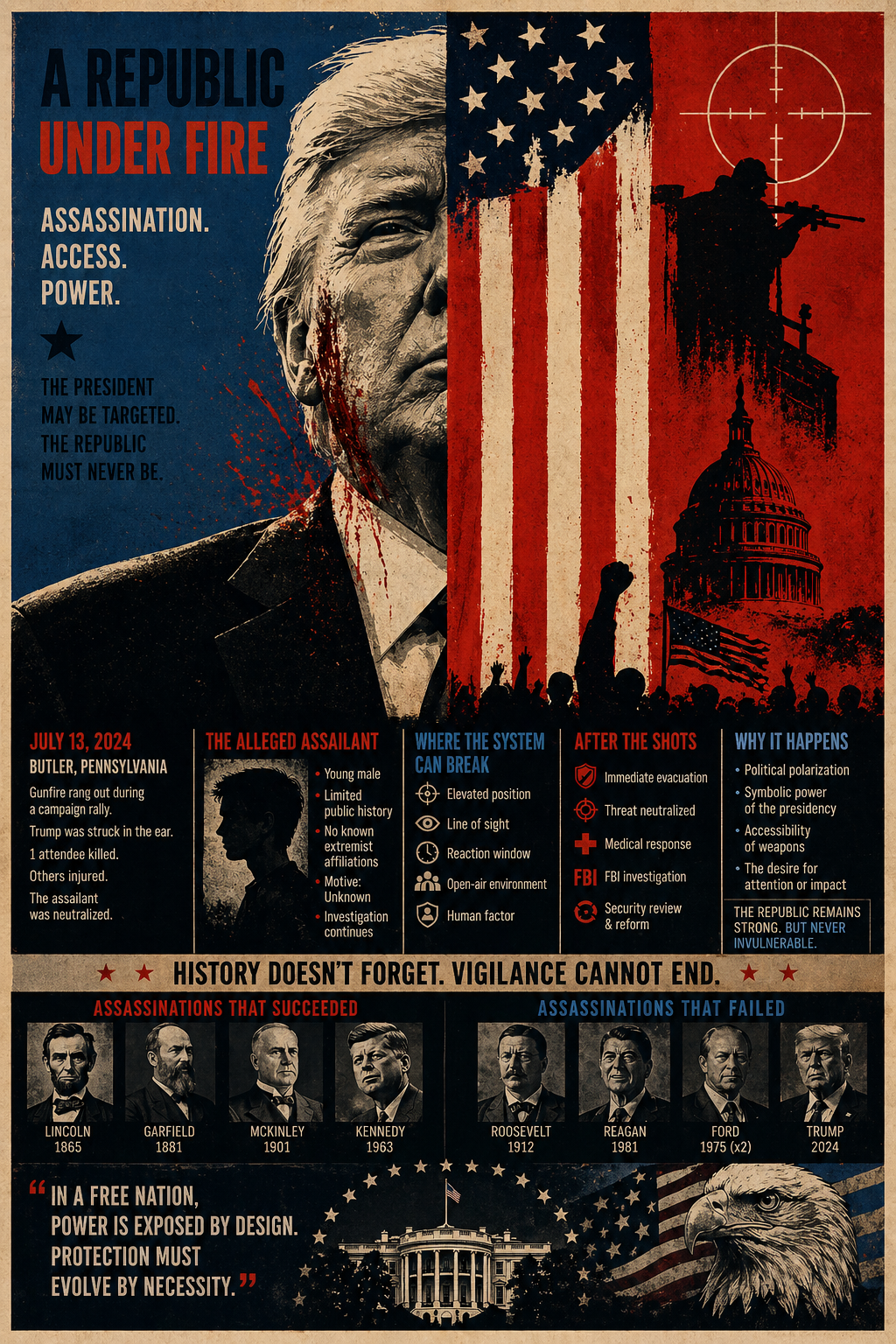
There is a persistent myth in American political culture that the presidency is insulated, protected not just by law enforcement but by an invisible barrier of inevitability, as though history itself bends to preserve the office; however, the attempted assassination of Donald Trump in July 2024 disrupted that illusion in a way that felt both shocking and strangely familiar, because while the event unfolded at a campaign rally in Butler, Pennsylvania—where gunfire struck Trump in the ear, resulting in injuries to attendees and the death of one spectator—it simultaneously echoed a deeper historical pattern in which proximity, vulnerability, and individual action intersect to challenge institutional control (Federal Bureau of Investigation [FBI], 2024; Secret Service, 2024).
The alleged assailant, identified in early reporting as a young male with limited public history of organized political extremism, represents a recurring and uncomfortable truth about assassination attempts in the United States: they are not always orchestrated by sophisticated conspiracies but often emerge from individuals operating within ideological, psychological, or opportunistic frameworks that defy easy categorization, thereby complicating immediate conclusions about motive and reinforcing the necessity of disciplined investigation over speculative narrative (FBI, 2024; Vossekuil et al., 2018). This dynamic is not new, as the United States has experienced multiple successful presidential assassinations, including those of Abraham Lincoln in 1865, James A. Garfield in 1881, William McKinley in 1901, and John F. Kennedy in 1963, each of which demonstrated that even in periods of evolving security, determined actors could exploit gaps in protection, while unsuccessful attempts against figures such as Ronald Reagan in 1981 and Gerald Ford in 1975 further illustrate that survival often hinges less on absolute prevention and more on rapid response and situational variables (Clarke, 2011; U.S. Secret Service, 2018).
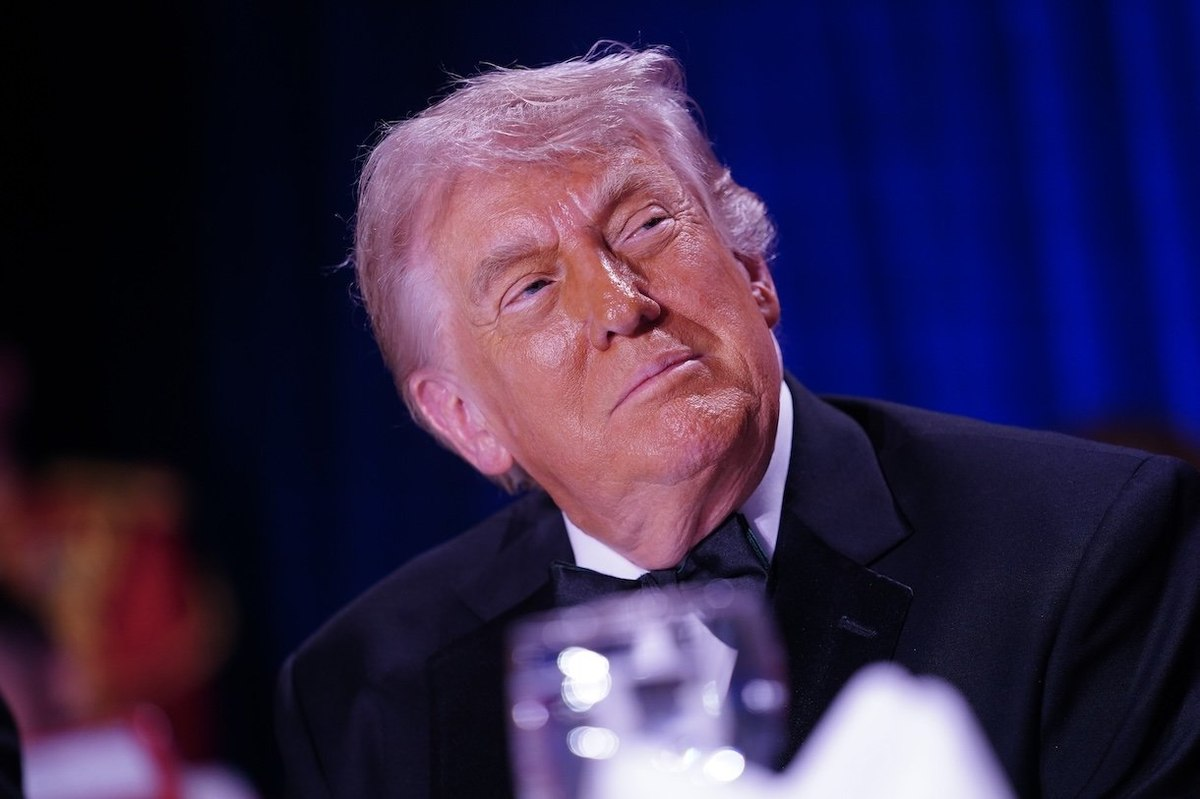
The Trump incident, therefore, should not be interpreted as an anomaly but rather as part of an enduring structural tension between democratic accessibility and executive security, a tension intensified by the nature of campaign rallies, which prioritize visibility and public engagement over the controlled environments typical of high-security events such as the White House Correspondents’ Dinner, where extensive vetting, layered screening, and spatial constraints significantly reduce the likelihood of external threats (White House Correspondents’ Association, 2023). In contrast, open-air political events inherently expand the threat landscape, requiring the United States Secret Service to balance crowd proximity, line-of-sight vulnerabilities, and real-time intelligence in ways that introduce potential failure points, including incomplete environmental control, delayed threat detection, or limited reaction windows once an attack is initiated (U.S. Secret Service, 2018; Blair & Schweit, 2014). Following the Butler incident, established protective protocols were activated, including immediate evacuation, neutralization of the attacker, coordinated medical response, and the initiation of a federal investigation, processes designed not only to stabilize the immediate situation but also to identify systemic weaknesses and implement corrective measures, reflecting a long-standing institutional approach in which each breach becomes a case study for future prevention (FBI, 2024; U.S. Secret Service, 2018). Yet, despite these mechanisms, the recurrence of assassination attempts suggests that the issue extends beyond procedural refinement into broader societal conditions, including political polarization, the symbolic power of the presidency, and the accessibility of weapons, all of which contribute to an environment in which high-profile figures remain targets for individuals seeking influence, recognition, or ideological expression (Clarke, 2011; Vossekuil et al., 2018).
Moreover, the public reaction to such events often reveals an additional layer of complexity, as narratives quickly form around legitimacy, intent, and consequence, sometimes amplifying uncertainty rather than clarifying it, particularly when early information is incomplete or contradictory, thereby underscoring the importance of measured analysis over immediate interpretation (FBI, 2024). In the case of Donald Trump, the political implications of the assassination attempt extend beyond personal survival, influencing public perception, campaign dynamics, and broader discourse regarding leadership and resilience, as moments of crisis can simultaneously reinforce support among existing constituencies while intensifying divisions within the electorate, a dual effect observed in previous incidents involving national leaders (Clarke, 2011). Ultimately, the attempted assassination in 2024 serves as a reminder that the security of democratic institutions is not solely a function of protective measures but also of the conditions that shape individual behavior and collective response, and while advancements in intelligence and security continue to reduce risk, they cannot eliminate it entirely, leaving the United States in a perpetual state of adaptation in which the preservation of openness must be continually weighed against the necessity of protection, a balance that remains unresolved and, perhaps, inherently unstable.
References (APA Style)
Blair, J. P., & Schweit, K. W. (2014). A study of active shooter incidents in the United States between 2000 and 2013. Federal Bureau of Investigation.
Clarke, J. (2011). Defining danger: American assassins and the new domestic terrorism. Transaction Publishers.
Federal Bureau of Investigation. (2024). Public statement and investigation summary: Butler, Pennsylvania incident.
U.S. Secret Service. (2018). Protective operations and threat assessment guidelines.
Vossekuil, B., Fein, R. A., & Berglund, J. (2018). The making of a targeted violence attacker. U.S. Secret Service National Threat Assessment Center.
White House Correspondents’ Association. (2023). History of the White House Correspondents’ Dinner.
 The Fair Response
Leave a comment