T
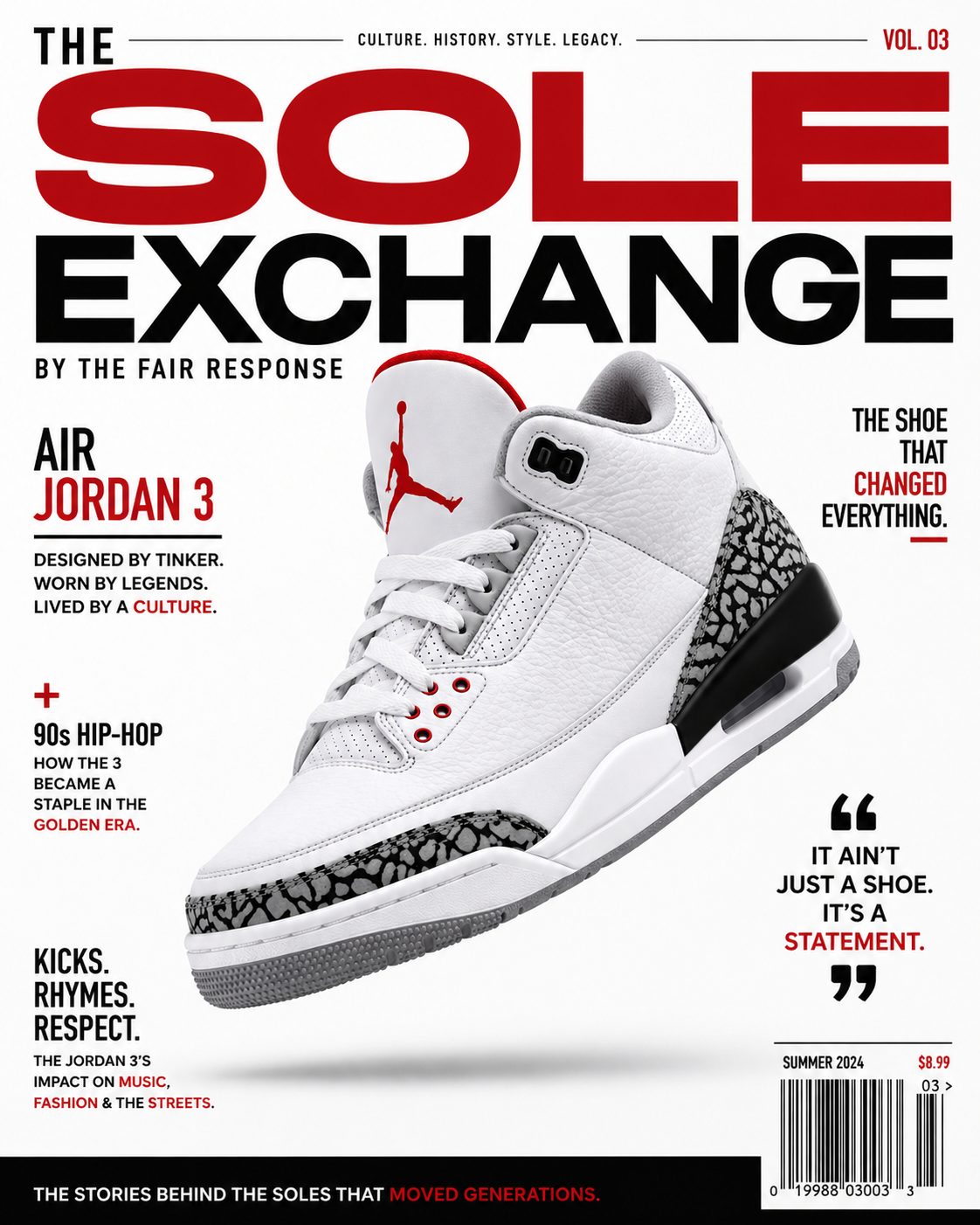
There are shoes… and then there are declarations. The Air Jordan 3 didn’t walk into 1988 quietly. It strutted in like it owned the room, like it had already seen the future and decided the rest of us needed to catch up. Designed by Tinker Hatfield, it introduced the Jumpman logo, elephant print, and—more importantly—a shift in thinking. This wasn’t just footwear. This was identity, stitched in leather and sold back to a generation that was already inventing itself.
By the time the 1990s hit, hip-hop wasn’t asking for permission anymore. It had already taken the culture, the charts, and the streets. By the late ‘90s, hip-hop was the dominant genre in America, moving tens of millions of records and reshaping global taste (Light, 1990; RIAA data) . And right there, laced tight and visible in music videos, album covers, and corner conversations, were Jordans—especially the 3s.
Eazy-E wore them like armor. Rappers referenced them like scripture. And suddenly, a basketball shoe wasn’t about basketball. It was about status. It was about saying, without speaking, “I made it out—or I’m about to.”
Now here’s where things get interesting, and a little uncomfortable.
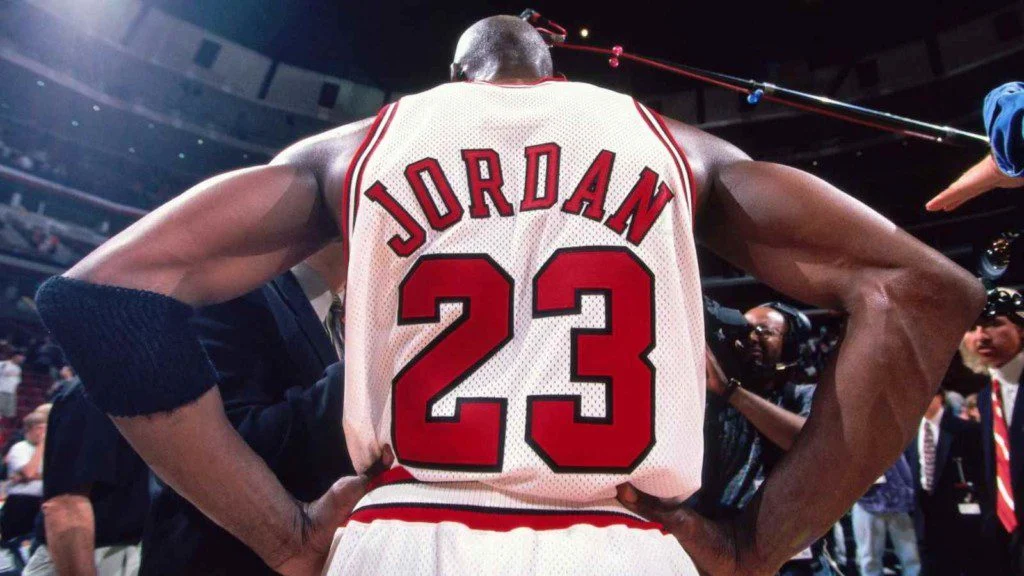
Nike didn’t just sell a shoe. They sold aspiration. Early Jordan products were already generating around $200 million annually by 1990, proving that this wasn’t a trend—it was a machine (Fortune, 1998) . The blueprint was simple and ruthless: attach greatness (Michael Jordan), package it as lifestyle, and let the streets do the marketing. And the streets did what they always do—took it, elevated it, and gave it soul.
Hip-hop didn’t just wear Jordans. Hip-hop baptized them.
But there’s always a cost when culture meets commerce.
On one hand, the Jordan 3 helped elevate Black expression into a global force. The shoe became a symbol of pride, style, and presence in a world that often tried to erase or minimize both. It showed that Black taste could drive global markets, not just participate in them. That matters. Deeply. The 1990s saw a shift where Black culture wasn’t just influencing America—it was America’s culture (Campaign Live, 2020) .
On the other hand… let’s not pretend everything was noble.
The same shoe that symbolized success also became a marker of division. Kids judged each other by what was on their feet. Neighborhoods saw conflict sparked over products that, at the end of the day, were designed in boardrooms far removed from the communities buying them. The resale and status economy around Jordans turned identity into currency—and sometimes, currency into danger. Today’s billion-dollar sneaker resale market didn’t come from nowhere; it was built on that same foundation of scarcity, desire, and social pressure .
And the Jordan 3 sits right at the center of that story.
It was the moment the shoe stopped being about the game and started being about the image. About perception. About who you are when people look down at your feet before they look at your face.
Funny thing is, the shoe never said a word. People did that part themselves.
The Jordan 3 didn’t create hip-hop culture—but it gave it a uniform. It didn’t invent aspiration—but it packaged it, priced it, and placed it in glass cases. It didn’t divide communities—but it exposed the fault lines that were already there.
And still… people lined up.
Still do.
Because somewhere between the leather, the logo, and the legend, the Jordan 3 made a promise. Not that you’d be Michael Jordan. Not even that you’d escape your circumstances. Just that for a moment—walking down the block, stepping into a room—you’d feel like you belonged to something bigger.
That’s the real transaction.
Not money for shoes.
But identity for symbolism.
And business has been cashing that check ever since.
References (APA Style)
Campaign Live. (2020). 6 brand lessons from Michael Jordan’s The Last Dance.
Fortune. (1998). Inside Michael Jordan’s unrivaled marketing impact.
Hibbett Sports. (2025). History & hip-hop shoes: Styles that changed the fashion game forever.
Light, A. (1990). Rap’s mainstream breakthrough. USA Today.
Wikipedia contributors. (2025). Air Jordan.
 The Fair Response
Leave a comment